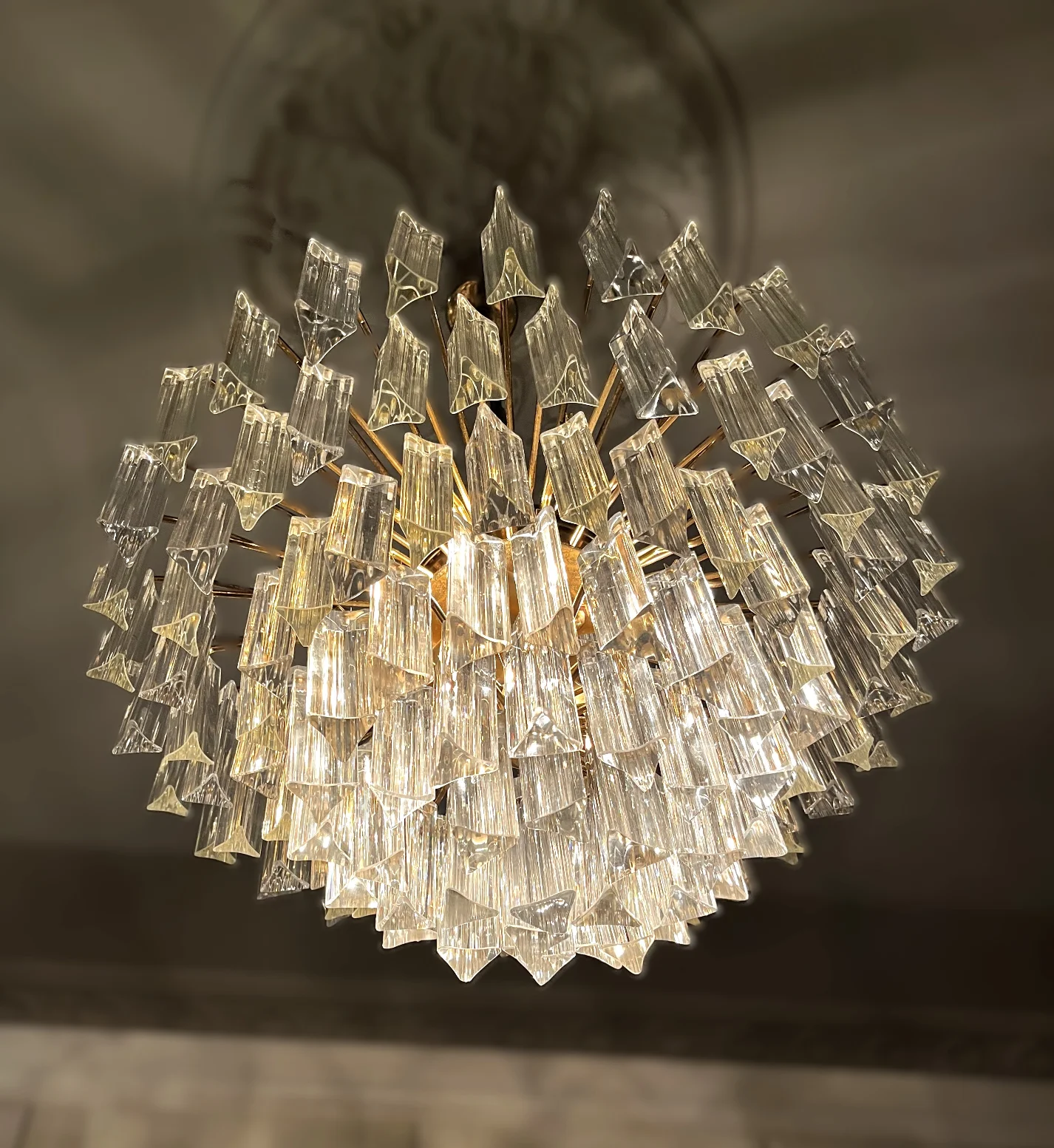

Venini Triedri
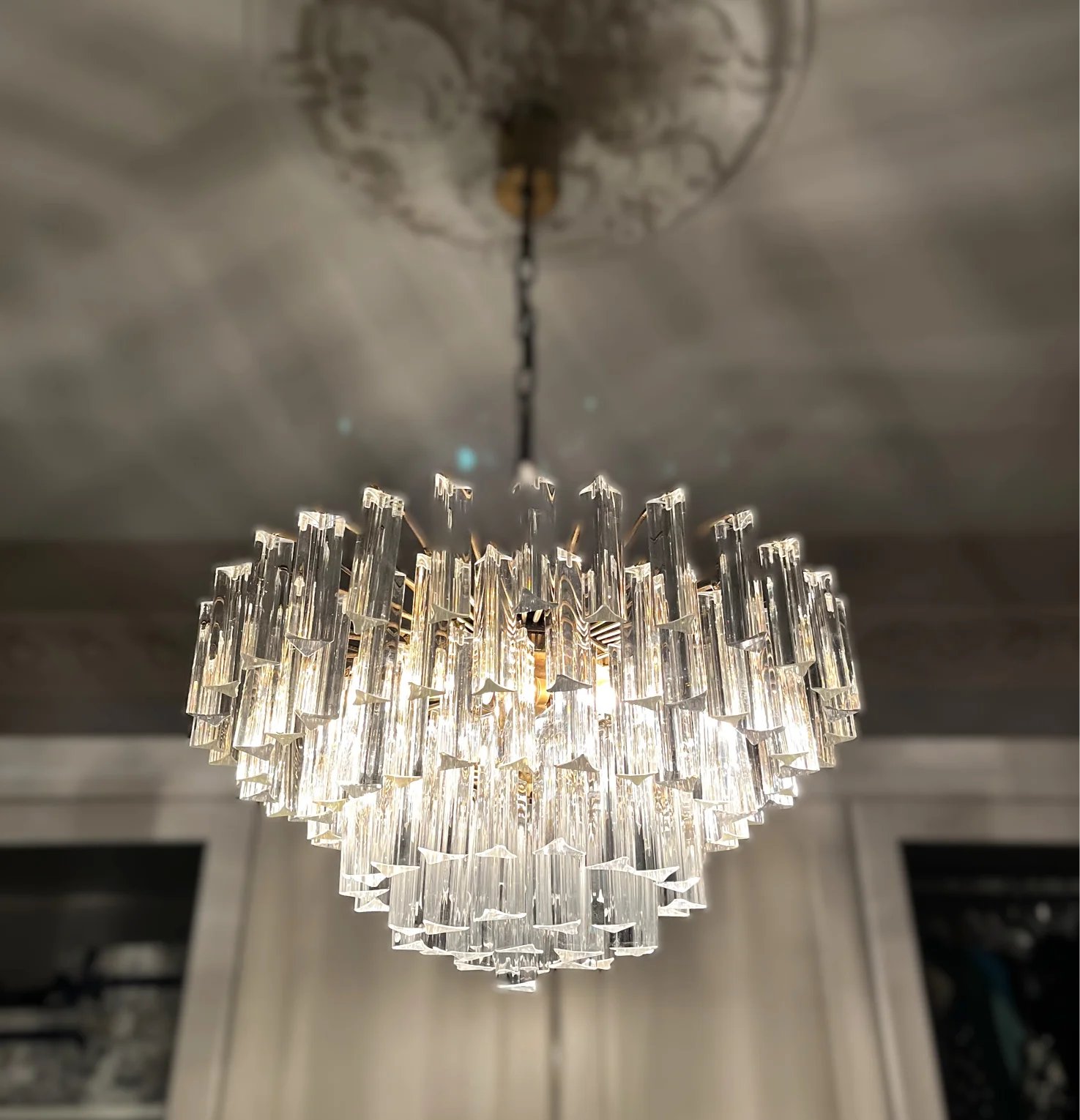
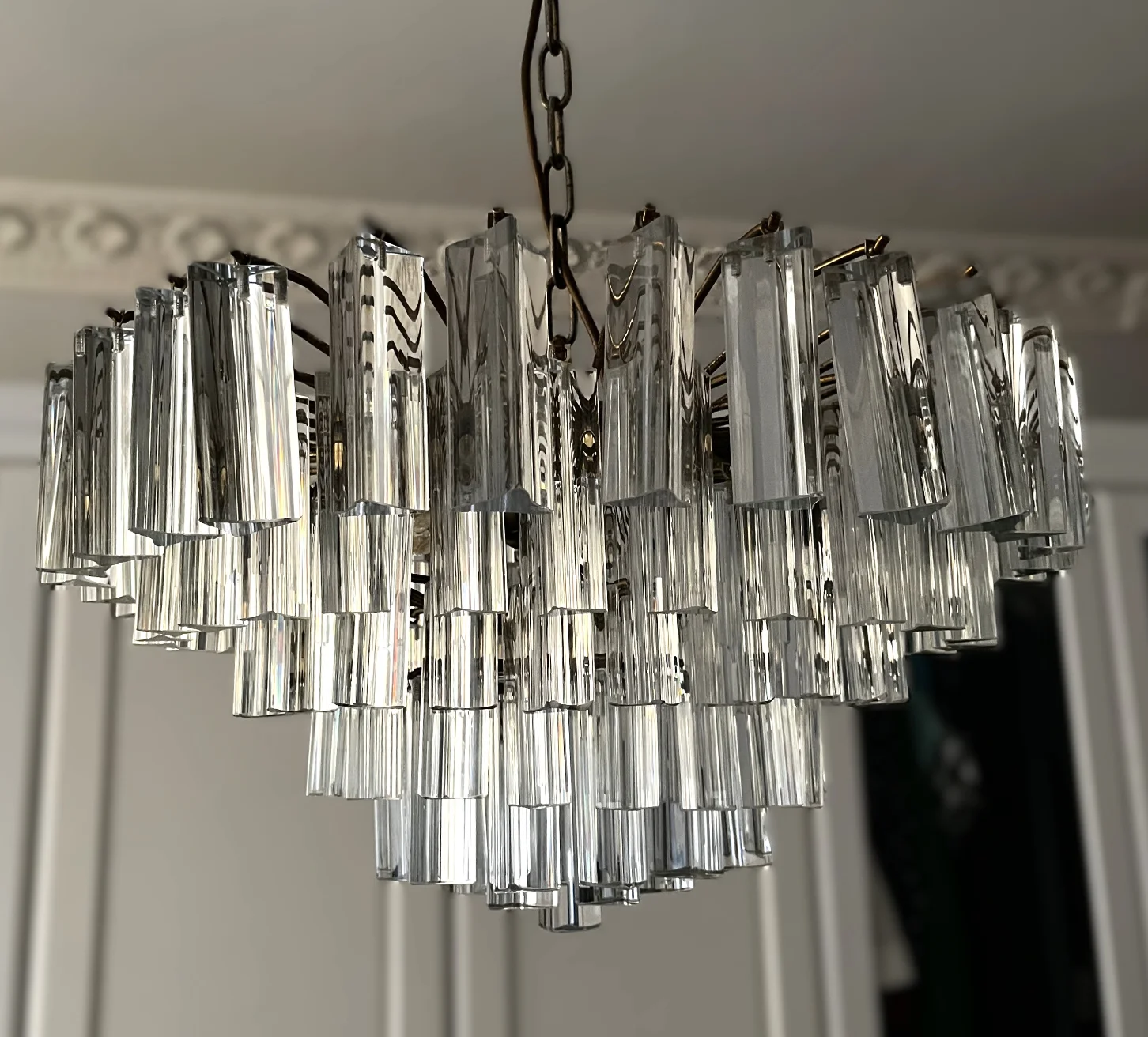
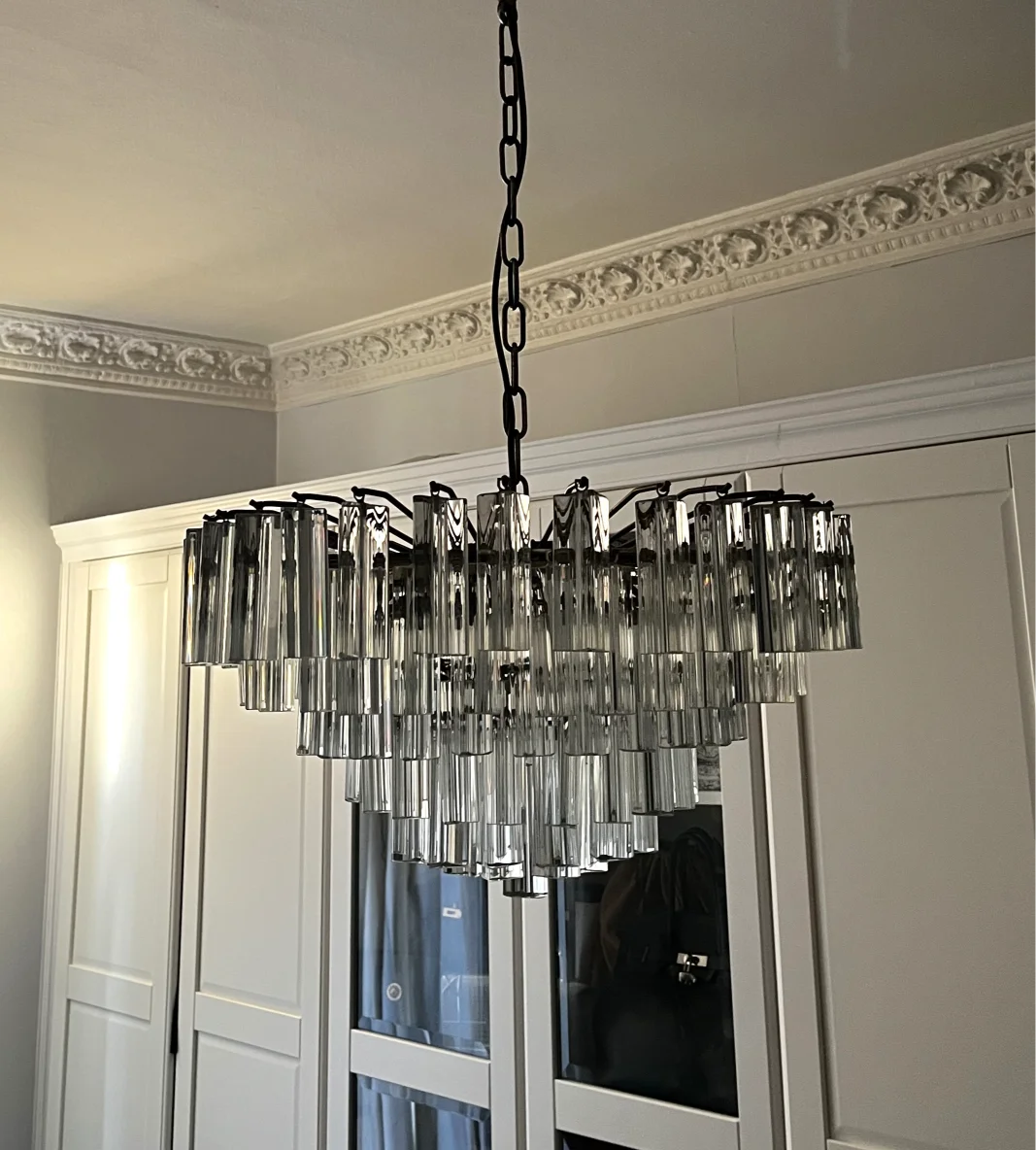
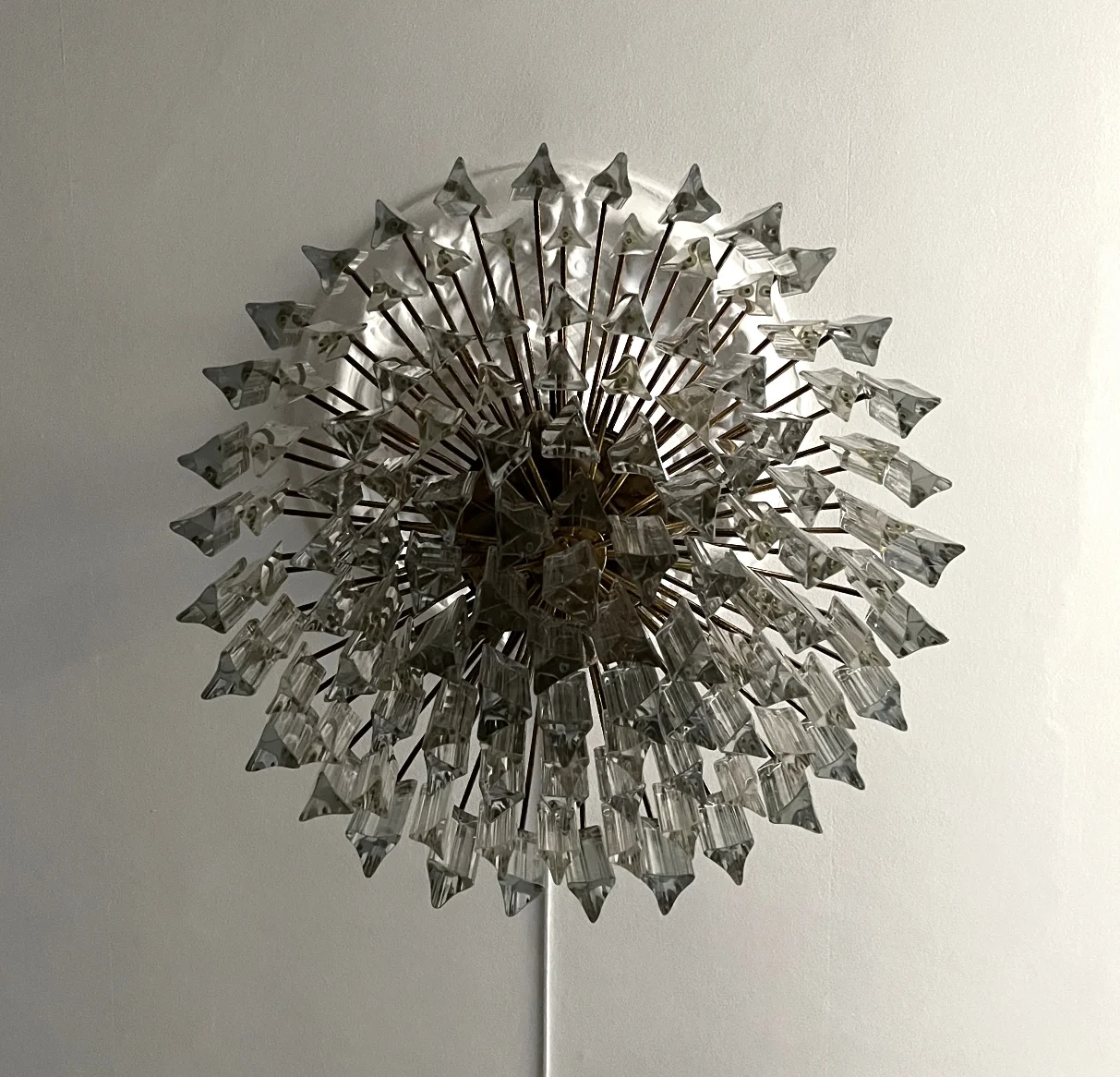
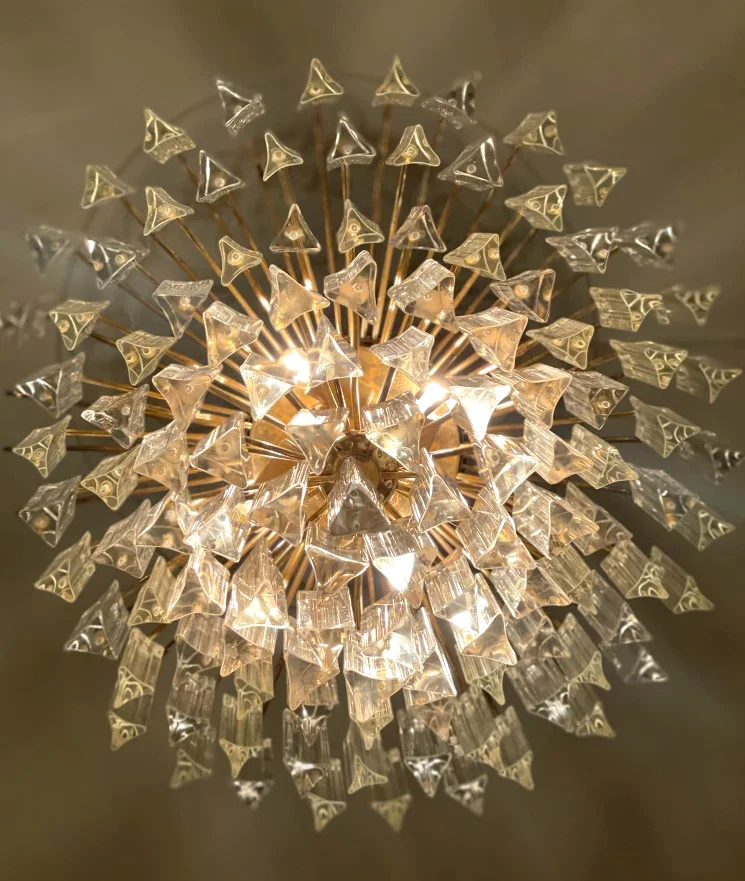
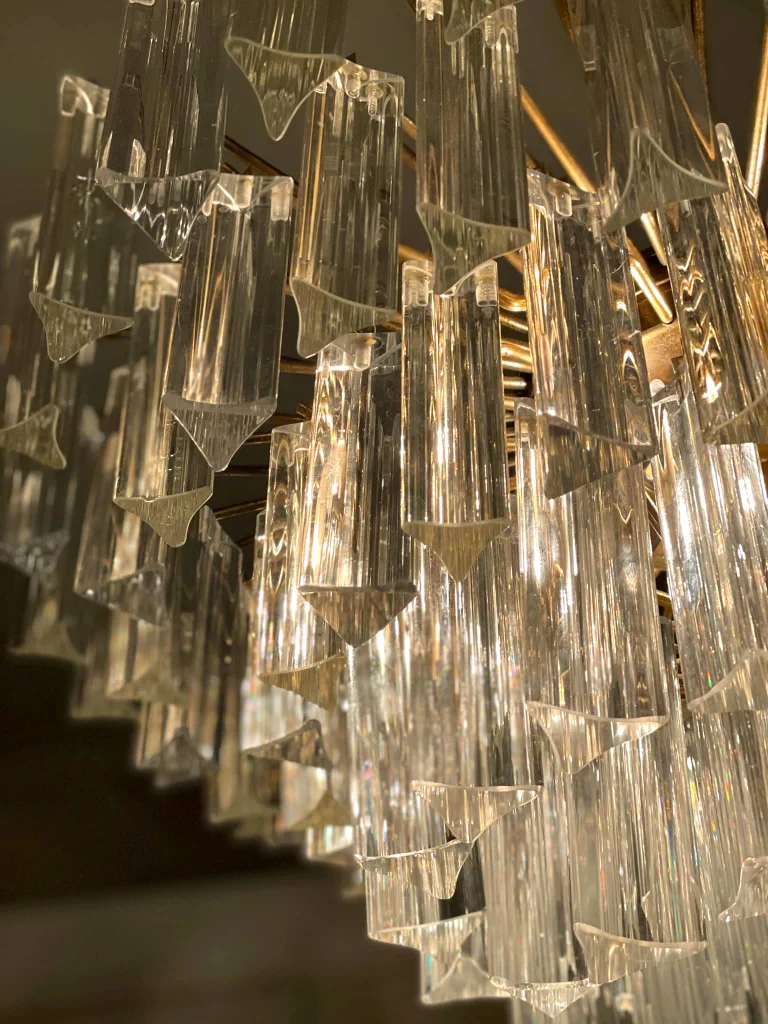
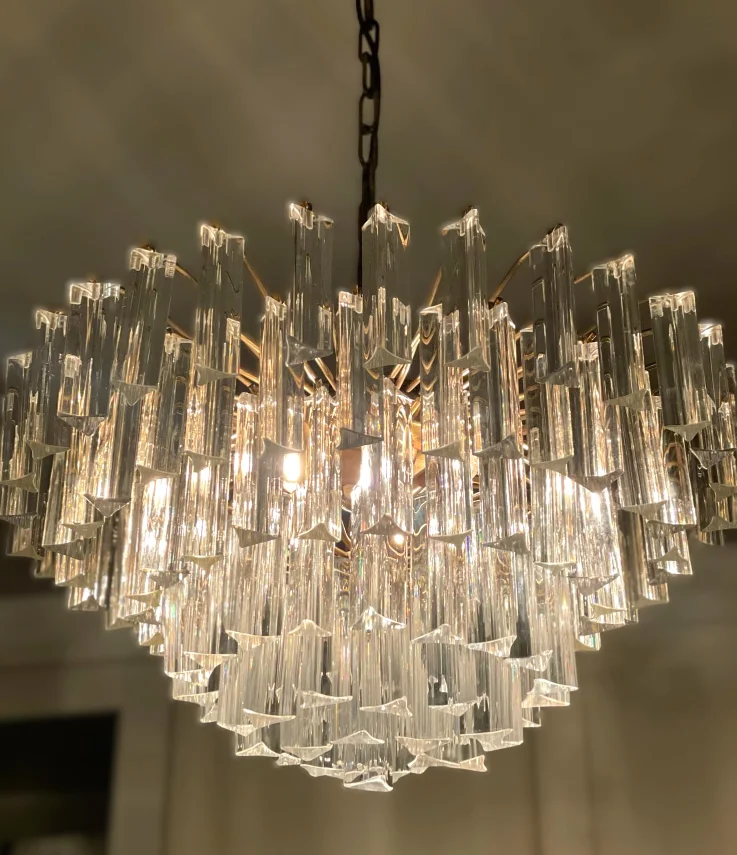
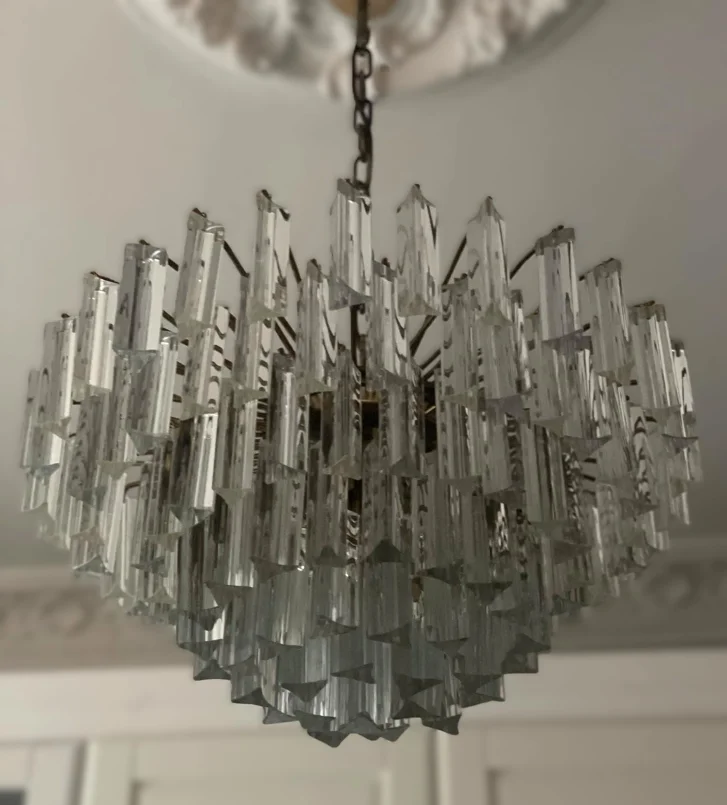
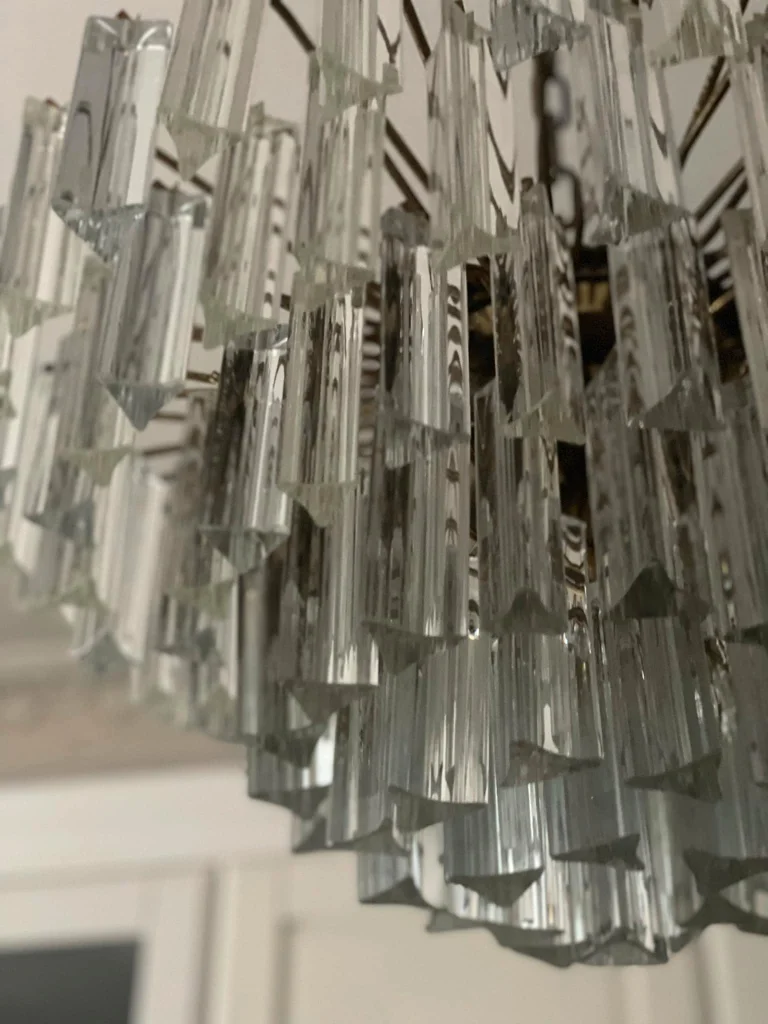
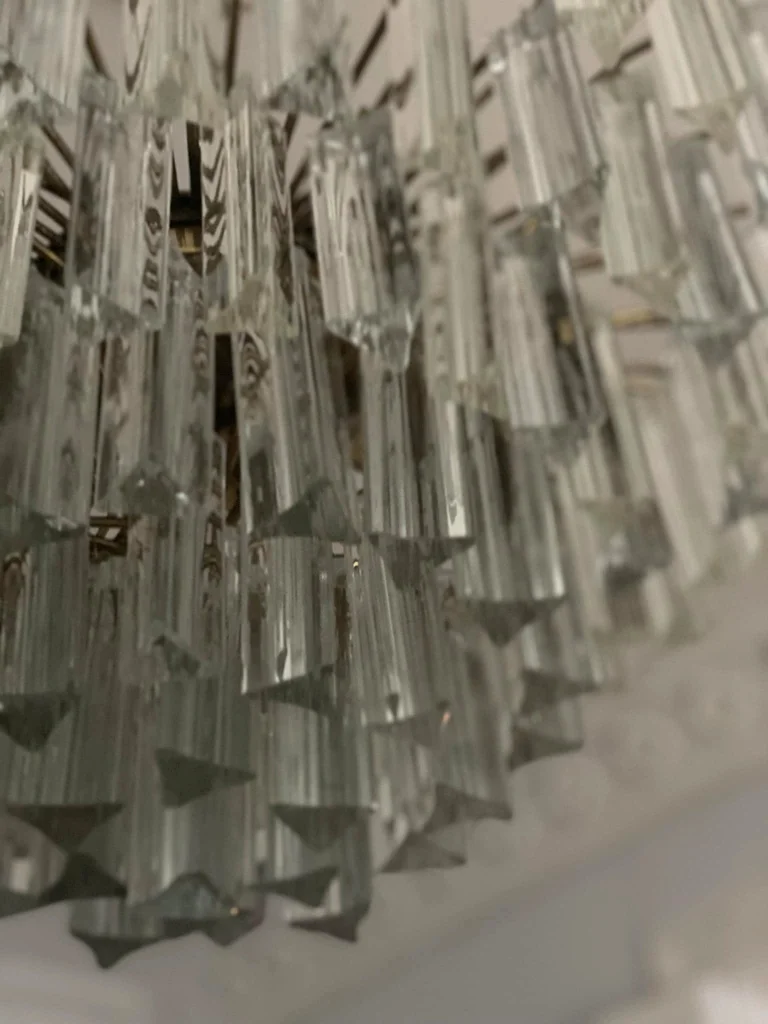
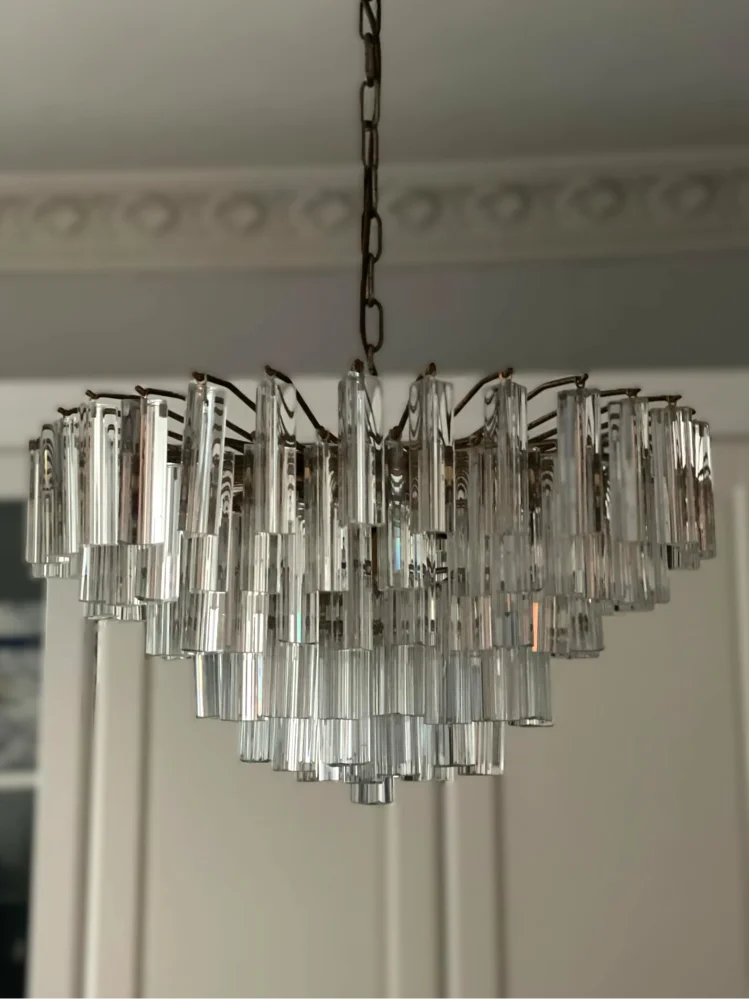
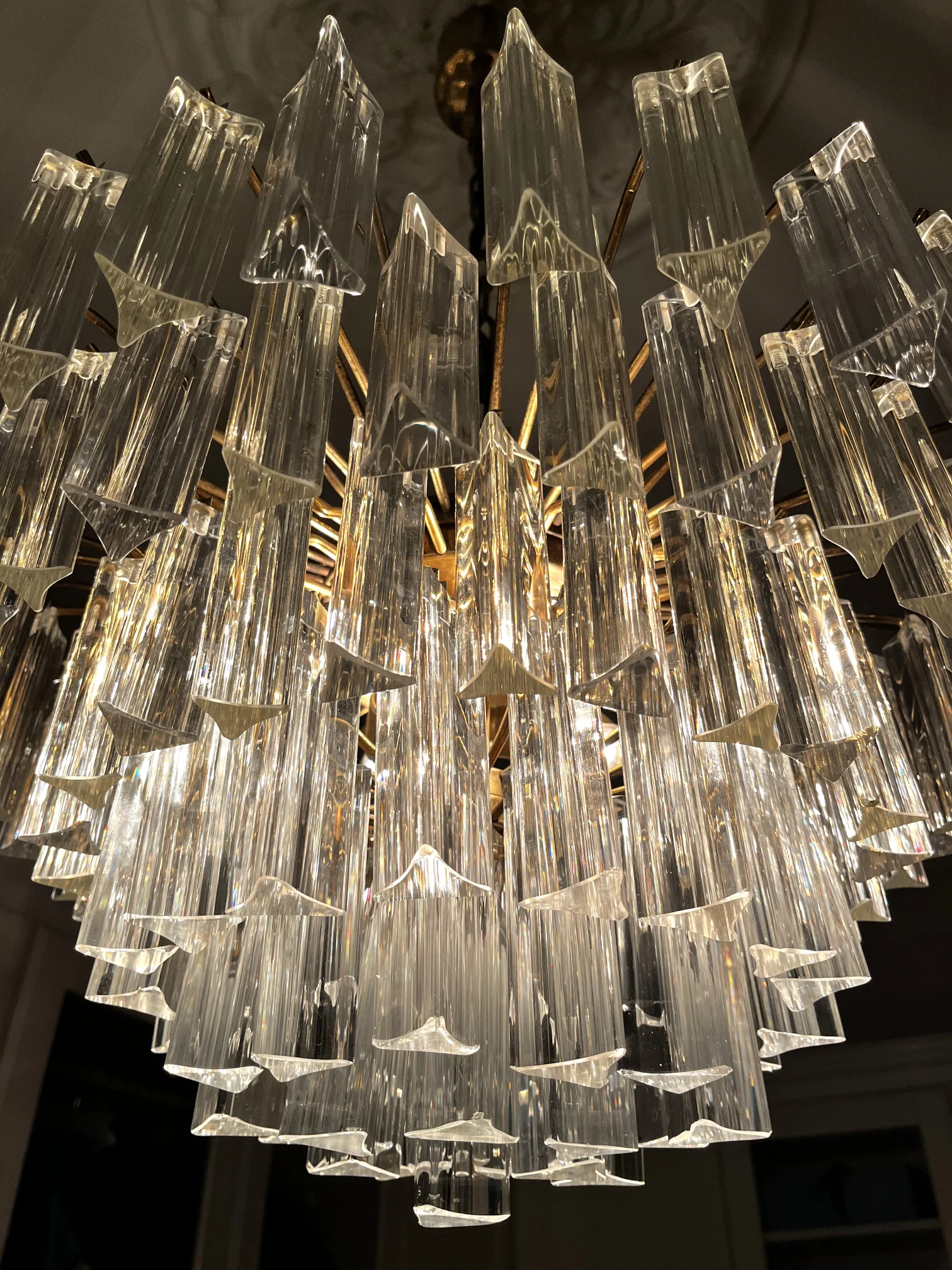
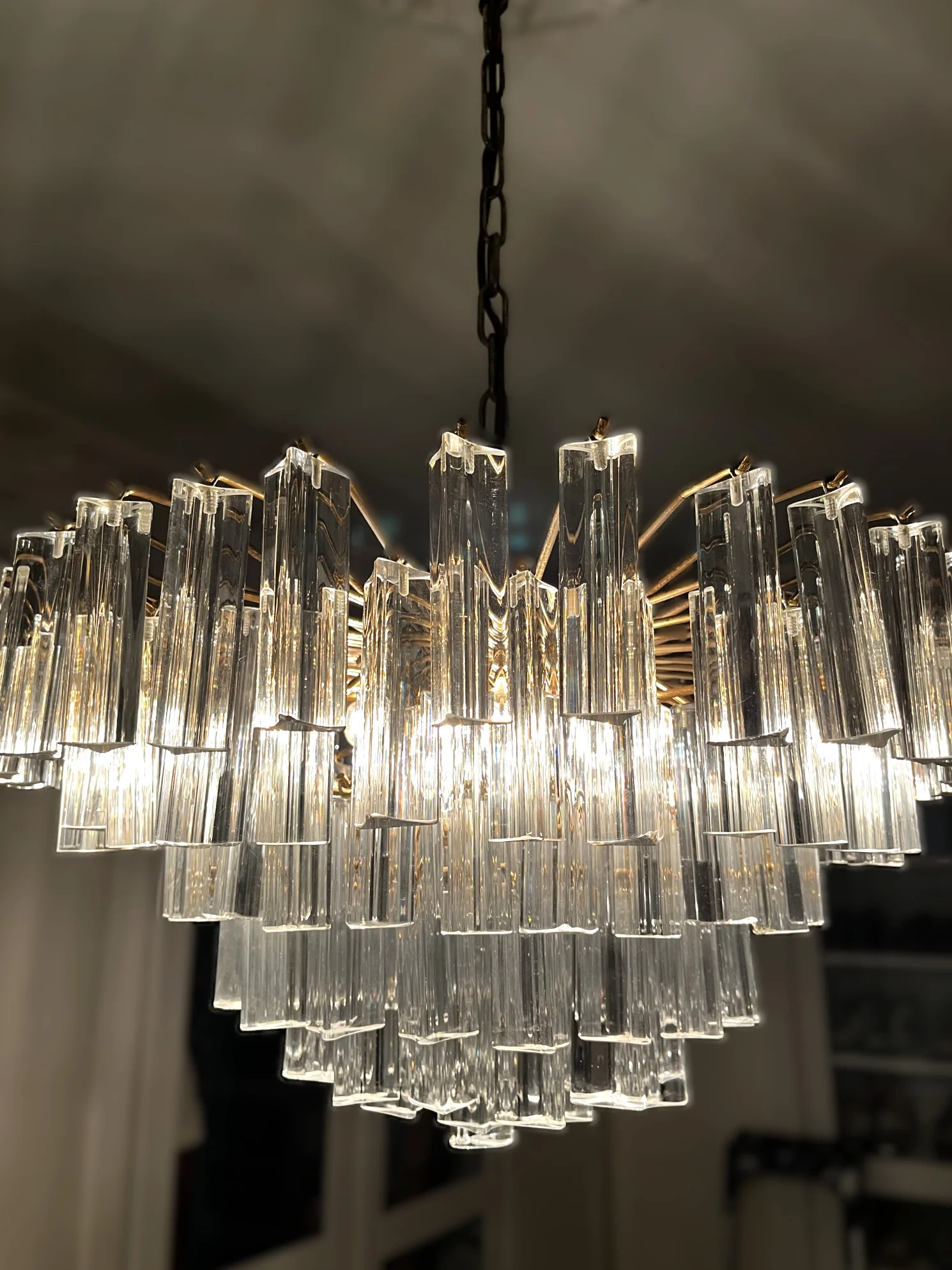
Venini Triedri Murano glass chandelier, an iconic lighting fixture known for its elegant design and exceptional craftsmanship. The chandelier consists of 121 triangular prism glass elements, creating a striking interplay of light and shadow. The chandelier is unsigned, but its distinctive design is reminiscent of the designer and/or manufacturer. See similar products in our online shop.
Dimensions:
- Height without cord: 33 cm
- Height with cord: 90 cm
- Width: 53 cm
- Number of prism glass elements: 121
A bit of history:
Paolo Venini (12 January 1895–22 July 1959)
Paolo Venini was one of the legendary figures in the production of Murano glass and an important contributor to Italian design in the 20th century. He is best known as the founder of the eponymous glassworks Venini & C.
Early life and education
Venini was born in the town of Cusano near Milan, Italy. After serving in the Italian army during the First World War, he studied law and soon began practising as a lawyer in Milan. There he became acquainted with Giacomo Cappellin, a Venetian antiques dealer who ran a shop in Milan.
Murano glassworks
In 1921, Venini and Cappellin founded a glassworks called Vetr(i) Soffiati Muranesi Cappellin Venini & C. on the island of Murano, the historic centre of glass production in the Venetian Lagoon. With Luigi Ceresa and Emilio Hochs as investors, they acquired the historic Murano glassworks of Andrea Barovier, employing the glassmakers from the previous company and appointing Riorda as technical director.
The plans suffered a setback when Riorda died before production began. Several of the most important glassmakers left to establish a competing company called Successori Andrea Riorda. Nevertheless, Venini and Cappellin’s glassworks soon became successful, gaining distribution through an important store in Milan and serving as a focal point for introducing modern design concepts.
In 1925, Cappellin left the company following internal disagreements, taking most of the company’s glassblowers with him. Venini then founded a new company together with several of the former glassblowers, called Vetro Soffiati Muranesi Venini & C. (V.S.M. Venini & C.), later known as Venini & C. The company established itself as a leading innovator in Murano glass production.
Design and collaboration
Venini gave creative responsibility for the Murano glass sculptures to Napoleone Martinuzzi, while Venini himself played an important role in the design of some of the company’s best-known products, including the “Fazzoletto” series (handkerchief vases), which he developed together with designer Fulvio Bianconi.
Venini collaborated with renowned architects and designers including Cini Boeri, Tomaso Buzzi, Gio Ponti, Carlo Scarpa, Ettore Sottsass, Alessandro Mendini, Tapio Wirkkala, Gae Aulenti, Turi Lundgren, Mona Morales-Schmidt and Massimo Vignelli. The company established its graphic identity and logo in 1982. Its philosophy has always been to combine the Murano glassmaking tradition with the craftsmanship of modern design through the work of leading designers. This approach continues today and includes more recent collaborations with Tadao Ando, Asymptote, Barber & Osgerby, Campana Brothers and Peter Marino.
After Venini’s death
After Paolo Venini died in 1959, the company remained under the management of other family members for more than two decades before being sold in 1985.
In 1997, Società Venini S.p.A. was acquired by the Royal Scandinavia Group. Later, in 2001, the company was sold to the Italian Luxury Industries Group and subsequently acquired by Damiani S.p.A.